Quick Answer
The “biggest” beer in the world is defined by chemical intensity and ABV, not sales volume. The current record holder is Snake Venom by Brewmeister, which hits a staggering 67.5% ABV through fractional freezing.
- Prioritize base beer quality over pure ABV percentages.
- Treat high-gravity beers as spirits, serving them in tiny 30ml pours.
- Check the brewery’s track record with standard styles before buying extreme-ABV bottles.
Editor’s Note — Amelia Cross, Content Editor:
I firmly believe that the race to achieve the highest ABV in beer is a gimmick that often insults the artistry of fermentation. In my years covering the industry, I have seen too many brewers sacrifice flavor for a headline-grabbing number. What most people miss is that a truly “big” beer should offer a massive, complex experience on the palate, not just a punch to the liver. Alex Murphy has the rare ability to distinguish between genuine technical prowess and marketing stunts, making him the perfect guide for this. Stop chasing the number and start chasing the character of the malt.
The air in the brewhouse is thick, heavy with the scent of toasted grains and the sharp, clean bite of sanitiser. It’s a familiar hum—the sound of pumps working overtime and the steady drip of a cooling jacket. When we talk about the “biggest” beer in the world, most drinkers immediately picture a factory floor churning out millions of cans of light lager. They’re wrong. Forget distribution and global market share. We aren’t measuring success by the pallet; we’re measuring it by the limits of yeast, the science of freezing, and the sheer audacity of the brewer.
The biggest beer in the world isn’t a sessionable pint you grab after a shift. It’s an exercise in extreme concentration. To claim this title, a brewery must push past the natural biological limits of fermentation, employing techniques that blur the line between a traditional brewery and a distillery. If you’re looking for a beer that will change how you perceive intensity, you need to stop looking at the mass-market giants and start looking at the outliers.
The Biological Ceiling of Brewing
To understand why these beers are so rare, you have to understand the yeast. According to the BJCP guidelines and basic microbiology, most standard brewer’s yeast strains—the workhorses that turn wort into beer—simply quit once they hit 12% to 15% alcohol. They’re like athletes who have run their race; they hit the wall and they stop. You can’t just throw more sugar into the tank and expect the yeast to keep working. They will die, and you’ll be left with a cloying, unfermented mess.
So, how does a brewery get to 67.5%? They cheat. They use fractional freezing, or ice distilling. It’s a brutal process. You start with a massive, barrel-aged imperial stout, freeze it, and carefully scrape away the ice crystals—which are essentially pure water. You repeat this dozens of times. Every cycle removes water and concentrates the alcohol. It’s expensive, it’s inefficient, and it’s why these bottles carry a price tag that makes a vintage Bordeaux look like a bargain. You’re paying for the volume that was discarded along the way.
Why You Should Never Drink It Like a Lager
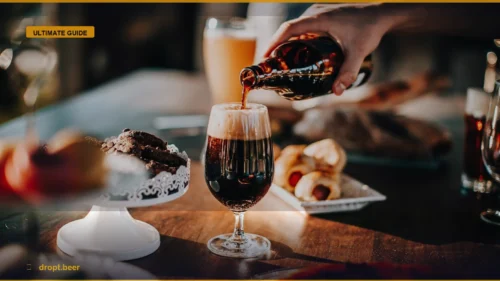
I see it happen at tastings all the time. Someone gets hold of a high-gravity behemoth, pours it into a standard pint glass, and takes a gulp. That is a mistake. When you’re dealing with a liquid that’s nearing the ABV of a cask-strength whisky, you aren’t drinking beer anymore. You’re drinking a digestif. These beers are designed to be sipped in 30-milliliter pours, ideally from a tulip or a small snifter, to let the aromatics open up without burning your nose hairs off.
If you treat these as session beers, you’re missing the point. The intensity is meant to overwhelm the senses in a specific, calibrated way. You’re looking for the remnants of that base beer—the dark chocolate, the dried figs, the heavy oak tannins from the barrel. If you chug it, all you’ll taste is the ethanol. That’s not a beer review; that’s just a bad night out.
Evaluating the Gimmick Versus the Craft
Not every high-ABV beer is created equal. There is a lot of snake oil in this space. I’ve tasted plenty of “extreme” beers that were nothing more than thin, boozy liquids with no soul. The secret is in the base. A legendary brewery like BrewDog, in their early days, understood this balance. They knew that if the base beer wasn’t a world-class imperial stout before the freezing process began, the final product wouldn’t hold up. Always look for a brewery that produces excellent, standard-strength styles first.
Check the label. Look for mentions of barrel aging or long-term conditioning. If a brewery is just selling you a percentage, they’re selling you a marketing tactic, not a beer. The best examples, even at 50% or 60% ABV, will show you the character of the malt and the time spent in the wood. If you find a bottle that lists its base beer style, you’re halfway to a quality experience. If it doesn’t, walk away.
Mastering the Pour and the Pace
When you finally get your hands on one of these, set the mood. You don’t need a loud bar or a crowded party. You need a quiet space where you can actually pay attention to the glass. Temperature matters, too. Don’t serve these ice cold. Let them sit for ten minutes after pouring. As the temperature rises toward room temperature, the volatile aromatics will start to release. You’ll find layers of molasses, port-like oxidation, and rich, syrupy mouthfeel that you’d never catch if the beer were served chilled.
We celebrate these beers at dropt.beer not because they are the “best” way to drink, but because they represent the extreme edge of what is humanly possible in a brewery. They are the high-wire acts of the drinking world. Respect the process, respect the alcohol content, and approach them with the curiosity of an apprentice. You might find that one tiny glass is enough to satisfy your curiosity for the entire year.
Your Next Move
Stop hunting for the highest number and start seeking out a single, high-quality “Barleywine” to understand the base potential of strong ale.
- [Immediate — do today]: Visit your local independent bottle shop and ask for their most complex, barrel-aged imperial stout rather than the highest ABV item on the shelf.
- [This week]: Purchase a set of proper tulip-shaped glassware; the shape is essential for capturing the volatile aromatics of strong, dark beers.
- [Ongoing habit]: Keep a simple tasting journal that notes the base style of your beers, helping you track which malt profiles handle high-gravity aging the best.
Frequently Asked Questions
Does the highest ABV beer taste like regular beer?
No. Once you enter the realm of extreme-ABV, freeze-distilled beers, the product behaves much more like a spirit. The mouthfeel is usually syrupy, the carbonation is often absent, and the heat from the alcohol is a dominant feature. It lacks the refreshing, crisp qualities associated with standard lagers or ales.
Is it safe to drink high-ABV beer?
It is perfectly safe, provided you consume it responsibly. Because of the extremely high alcohol content, these beers are intended to be sipped in very small quantities, similar to a high-proof whisky or liqueur. Treating them like a standard pint is a recipe for quick intoxication and a poor sensory experience.
Why is the biggest beer in the world so expensive?
The cost is driven by the process. Fractional freezing requires discarding a significant portion of the original beer volume to concentrate the alcohol. This, combined with the long aging times required for the base beer and the labor-intensive nature of the freezing cycles, makes these bottles expensive to produce and rare to find.